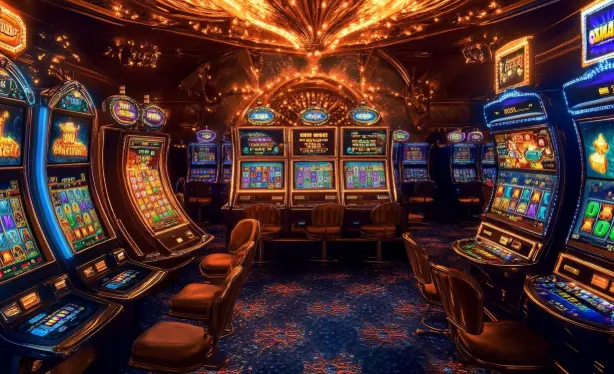
Are Blockchain Casinos Provably Fair? The Cryptographic Truth Behind Modern Digital Wagering
In the rapidly evolving landscape of online gambling, the term provably fair has shifted from a niche technical buzzword to a fundamental pillar of player trust. But what does it actually mean, and can a blockchain-based casino truly guarantee that every spin, deal, or roll is immune to manipulation? The answer lies not in marketing rhetoric, but in the immutable mathematics of cryptographic hashing and decentralized ledgers. 🎲

The Mechanics of Verifiable Randomness: Hash Functions and Seed Pairs
At the core of any credible provably fair system is a cryptographic hash function, typically SHA-256 or HMAC-SHA256. Before a single wager is placed, the casino generates a secret server seed and hashes it, displaying the resulting hash to the player. This commitment ensures the house cannot alter the seed after the fact. The player then contributes a client seed, and together they produce a deterministic outcome. Because the server seed is revealed only after the bet is settled, any user can independently verify that the result was not tampered with. This is not blind faith; it is computational proof. Without this mechanism, a provably fair claim is merely hollow branding.
On-Chain Settlement and the Role of Smart Contracts
Blockchain casinos elevate this transparency by anchoring wager outcomes directly onto a public distributed ledger. Smart contracts—self-executing code deployed on networks like Ethereum, Solana, or Polygon—can automate payouts and enforce game logic without human intervention. When a player initiates a bet, the contract calculates the result using the pre-committed seeds and instantly transfers winnings to the player’s wallet. This eliminates the notorious “house edge manipulation” that plagued traditional online casinos. Moreover, because the ledger is immutable, no operator can retroactively alter bet history or confiscate funds arbitrarily. The cryptographic audit trail is permanent and globally accessible.

RNG vs. Provable Fairness: Why Certification Alone Falls Short
Traditional regulated casinos rely on Random Number Generators certified by independent testing agencies. While this offers a baseline of integrity, it remains a black-box model: players must trust the auditor, the operator, and the server infrastructure. Provably fair systems replace that trust with verifiable computation. The distinction is critical. A certified RNG could theoretically be compromised at the server level without immediate detection. A properly implemented provably fair protocol, however, makes such tampering computationally infeasible. The only remaining variable is the integrity of the client seed generation, which responsible platforms address through open-source verifier tools.
Potential Vulnerabilities and the Limits of Trustlessness
No system is entirely immune to exploitation. A provably fair casino can still suffer from flawed smart contract logic, front-running attacks on public mempools, or compromised private key management. Furthermore, if a platform controls the client seed generation or obscures the verification process, the fairness guarantee collapses. True provable fairness demands full transparency: open-source code, published hash algorithms, and a user-friendly verification interface. Players must also understand that blockchain immutability does not prevent a casino from refusing to honor a payout before the bet is placed—though smart contracts mitigate this risk substantially. Vigilance remains essential. 🔐
Evaluating a Blockchain Casino’s Fairness Claims: A Practical Checklist
To determine whether a blockchain casino is genuinely provably fair, scrutinize these elements: First, does the platform publish the server seed hash before each bet? Second, is the client seed editable by the player? Third, are the game outcomes verifiable via an independent, open-source script? Fourth, are payouts executed automatically by smart contracts rather than manual processing? Fifth, has the underlying code been audited by a reputable third-party firm specializing in cryptographic security? If any of these criteria are missing, the provably fair label is likely decorative. The industry’s most reputable operators, such as those built on decentralized autonomous organization frameworks, meet all five standards without exception.
The Future of Trustless Wagering and Regulatory Convergence
As jurisdictions worldwide begin to draft frameworks for decentralized gambling, provable fairness will likely transition from a competitive advantage to a baseline legal requirement. The convergence of zero-knowledge proofs and layer-2 scaling solutions promises even faster verification with lower fees, making cryptographic audits accessible to casual players. Meanwhile, traditional licensing bodies are exploring hybrid models that incorporate on-chain attestations. The trajectory is clear: the casinos that thrive will be those that treat mathematical proof, not advertising claims, as the ultimate arbiter of fairness. For the discerning bettor, the question is no longer whether blockchain casinos can be provably fair—it is whether they choose to be. 💎