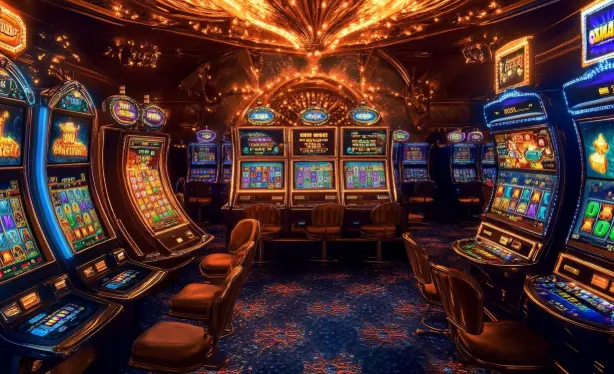
Why Manual Limit Features Beat Self-Control Every Time
The moment you sit at a US casino slot machine, the machine's internal accounting system already knows your coin-in rate, your average bet, and exactly how fast you burn through a bankroll. What it does not know is when you plan to stop. That gap is where every disaster begins. If you are still relying on willpower to walk away, you are running an unwinnable algorithm against a device engineered to keep you seated. 😤 Setting a hard spending limit is not a suggestion, it is a technical countermeasure, and on modern US slot floors you have more control over the machine's behavior than the operator wants you to realize.
The Two Layers of Slot Limit Enforcement
Understand the architecture before you touch a button. A US slot machine enforces spending limits at two distinct levels: the player-accessible interface and the back-end player tracking system. The first layer lives on the machine's service menu or player preference screen, where you can configure a session loss limit, a single-session win limit, and a time-based reminder. The second layer lives inside the casino's player tracking network, tied to your loyalty card and, in an increasing number of jurisdictions, to voluntary exclusion and responsible gaming databases. The spending limit you set on the glass is immediate and self-enforced; the limit attached to your tracked account is operator-enforced and far harder to override on a whim.
Configuring the On-Machine Session Limit
On most modern US slot platforms, the on-machine limit menu is buried behind a service key sequence that floor staff trigger, or it is exposed through a player preference button on the touchscreen. Look for a menu labeled Player Limits, Responsible Gaming, or Session Settings. Inside, you will typically find three parameters: a maximum loss threshold, a maximum win threshold, and a session time cap. Set the loss threshold to a number you would genuinely walk away from without regret, not the number your ego suggests. When the threshold triggers, the machine locks into a display state that forces a cash-out and a cool-down timer. The cool-down is the part that actually works, because it interrupts the spin cycle long enough for your decision-making brain to re-engage. 🎰
Using Your Loyalty Card as a Hard Stop
Here is the insider move most players never execute. The casino's player tracking system can be configured to accept a daily loss limit that is enforced across every machine on the property, not just the one you are sitting at. Ask the players club desk to attach a daily spend cap to your card. Once that cap is hit, your card will fail to authorize further play for the day, and the floor staff will see the flag. This is the closest thing to a genuine hard stop available on a US slot floor, and operators are legally obligated to honor it in most regulated states. The catch: you must request it before you start playing, and you cannot casually reverse it at 3 a.m. when the machine is "due."

TITO Tickets and the Cash-Out Discipline Trick
Ticket-in, ticket-out systems have a nasty behavioral side effect: a paper ticket feels less like money than a stack of twenties. Exploit that psychology in reverse. Set your session limit, and the instant you hit a win above a threshold you define, cash the ticket out and pocket it. Never reinsert a ticket you have already cashed. The machine's session accounting treats reinserted tickets as fresh bankroll, which resets your mental ledger and destroys the limit you set. Physically separating the ticket from the machine is a crude but brutally effective circuit breaker.
Jurisdiction Rules You Cannot Ignore
Regulated US markets differ sharply on what limits a machine can enforce. Nevada and New Jersey require slot floors to display responsible gaming information and offer self-limit enrollment, but the enforcement mechanism varies by operator. Tribal casinos operating under compacts often have their own self-exclusion language, and some are stricter than the state commercial floors. Before you assume a limit is active, confirm it at the players club desk and get a printed confirmation of the parameters you set. A limit that exists only in your memory is not a limit, it is a wish. 😑
The Cool-Down Timer Is the Real Weapon
Every limit configuration ultimately routes through a mandatory cool-down period. This is the single most important parameter you control. A ten-minute lockout after a loss threshold is nearly worthless; a twenty-four-hour lockout is a genuine barrier. Push the cool-down to the maximum the machine will accept. The spin cycle is designed to compress your sense of time, and a long enforced pause breaks that compression far more reliably than any amount of self-talk. When the timer expires, the machine will let you back in, but the decision to return will now be a deliberate act rather than a reflex.